

Blackwork Tattoos
Auckland Tattoo Studio » Tattoo Style » Blackwork Tattoo
Blackwork is tattooing stripped back to one colour and built on contrast. Solid black shapes, heavy linework and dense pattern, with the skin itself doing the work that colour would do in another style. Our artists work blackwork across ornamental, geometric and illustrative designs at both our Auckland studios.
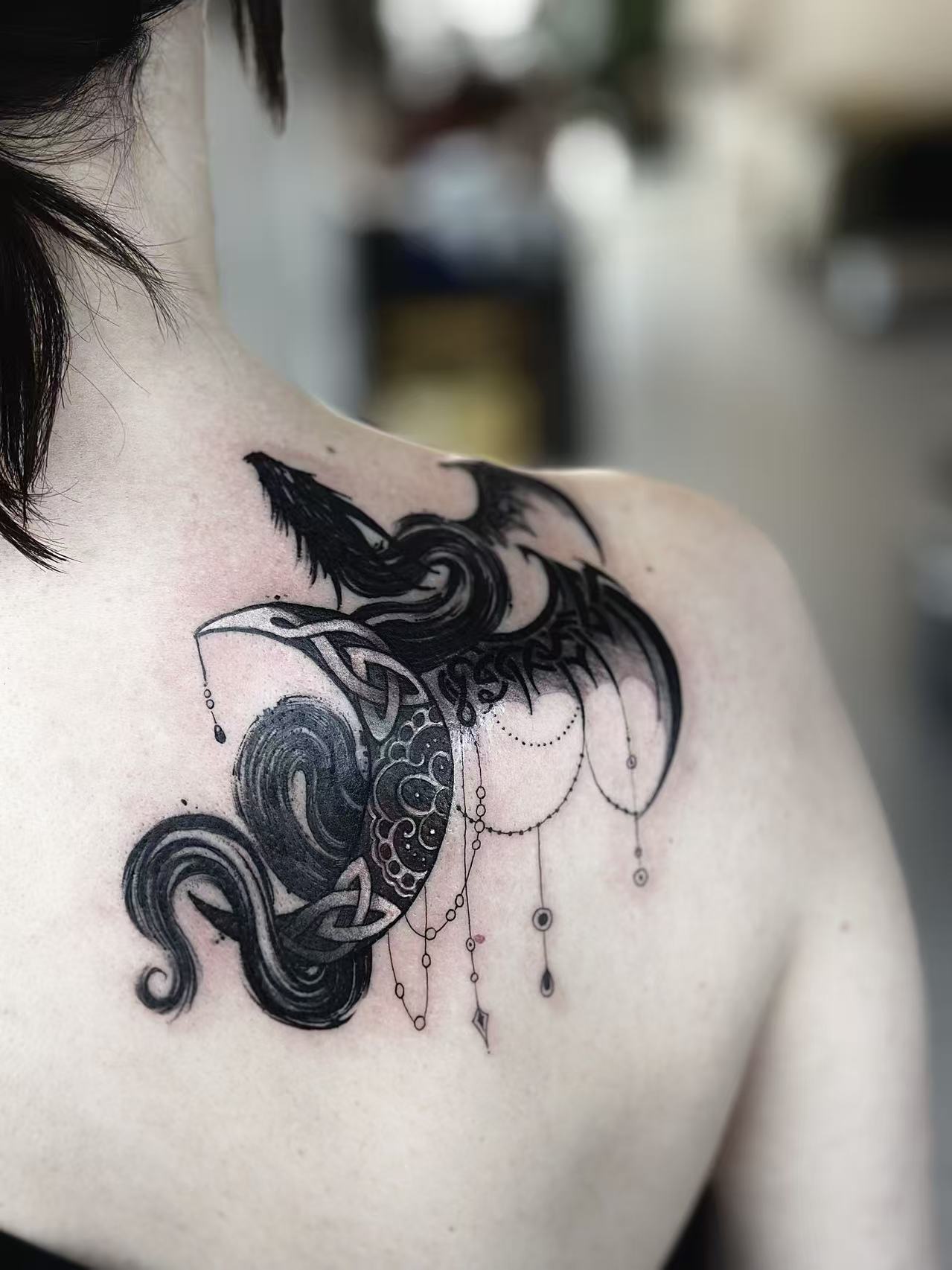
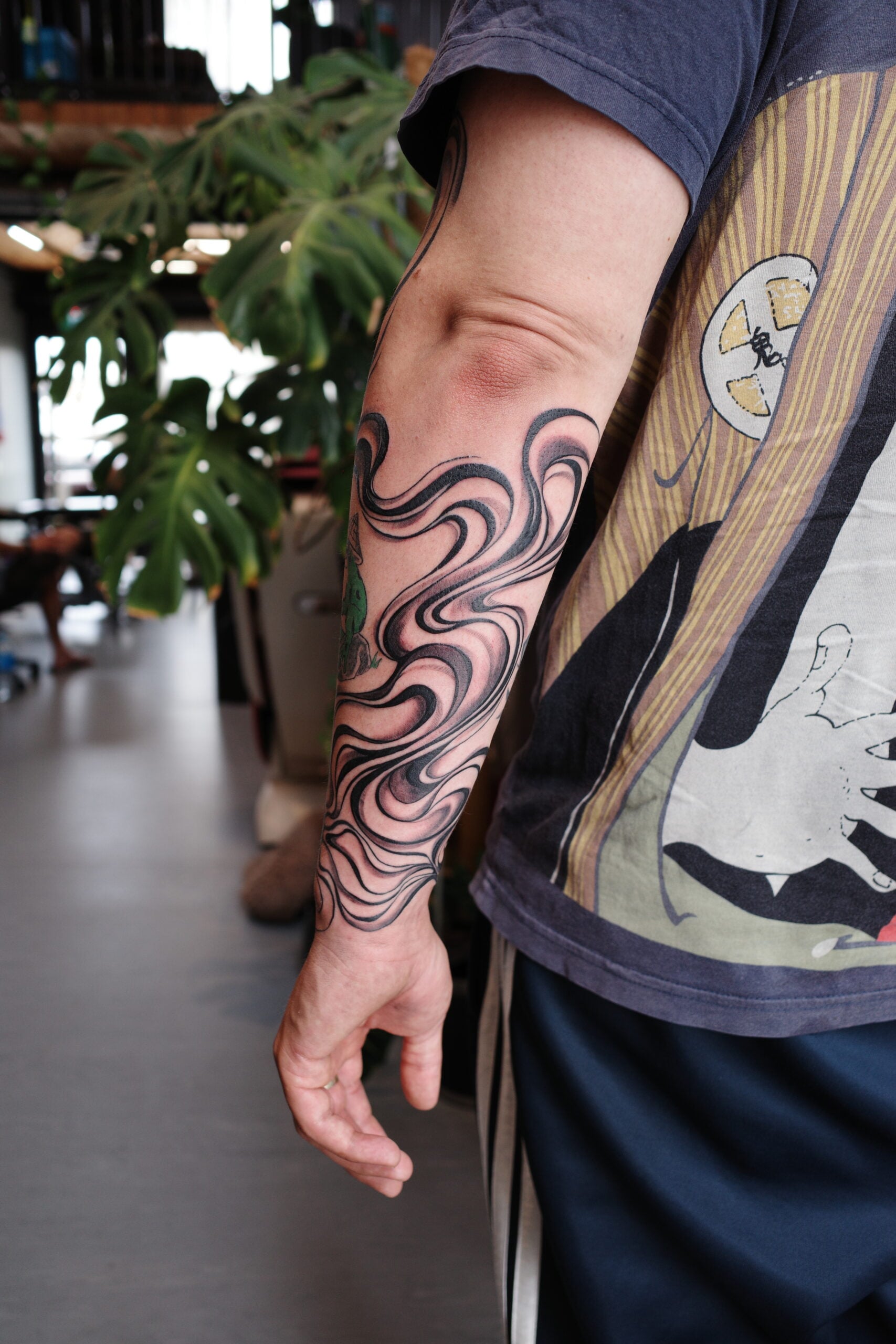
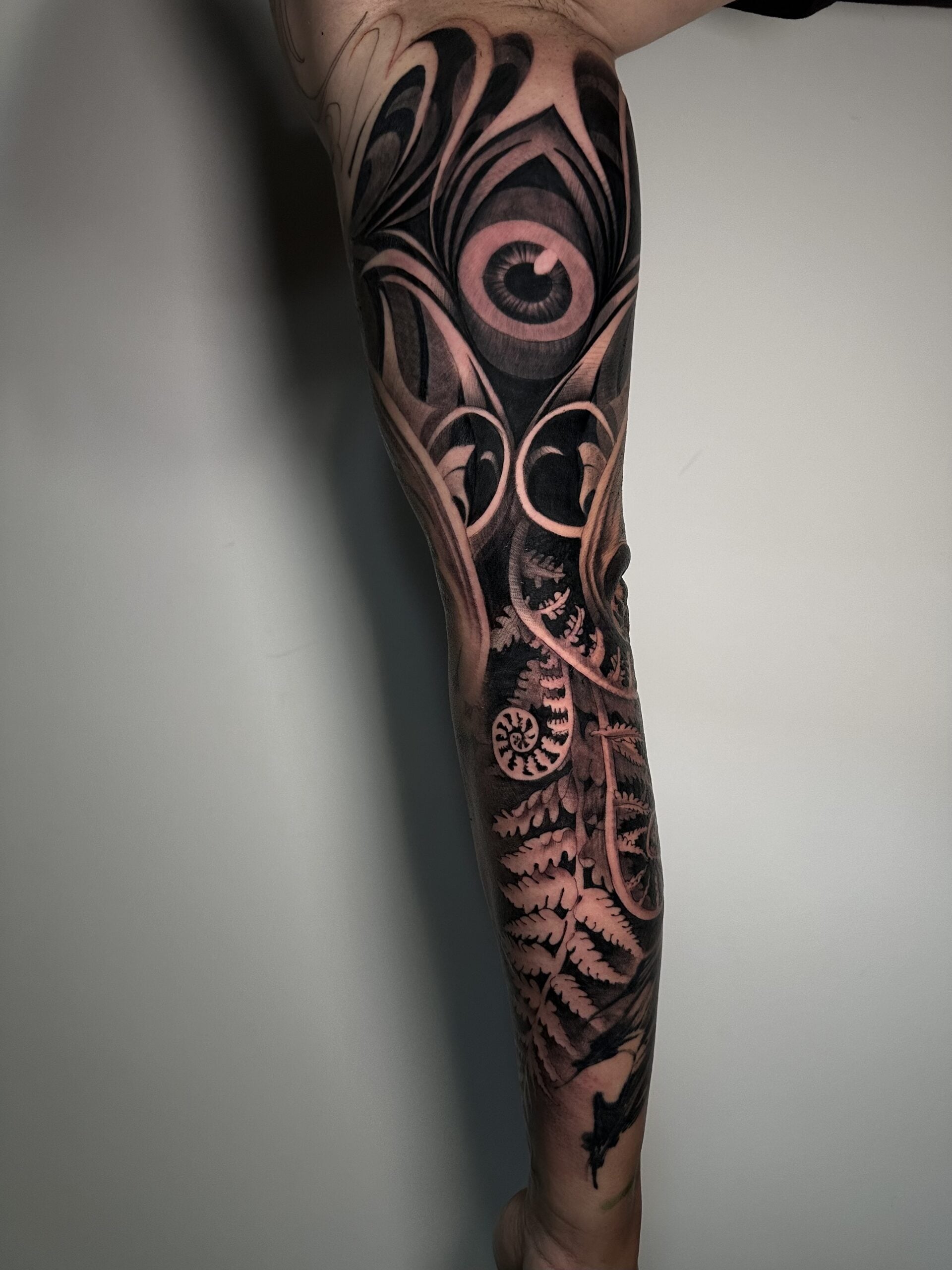
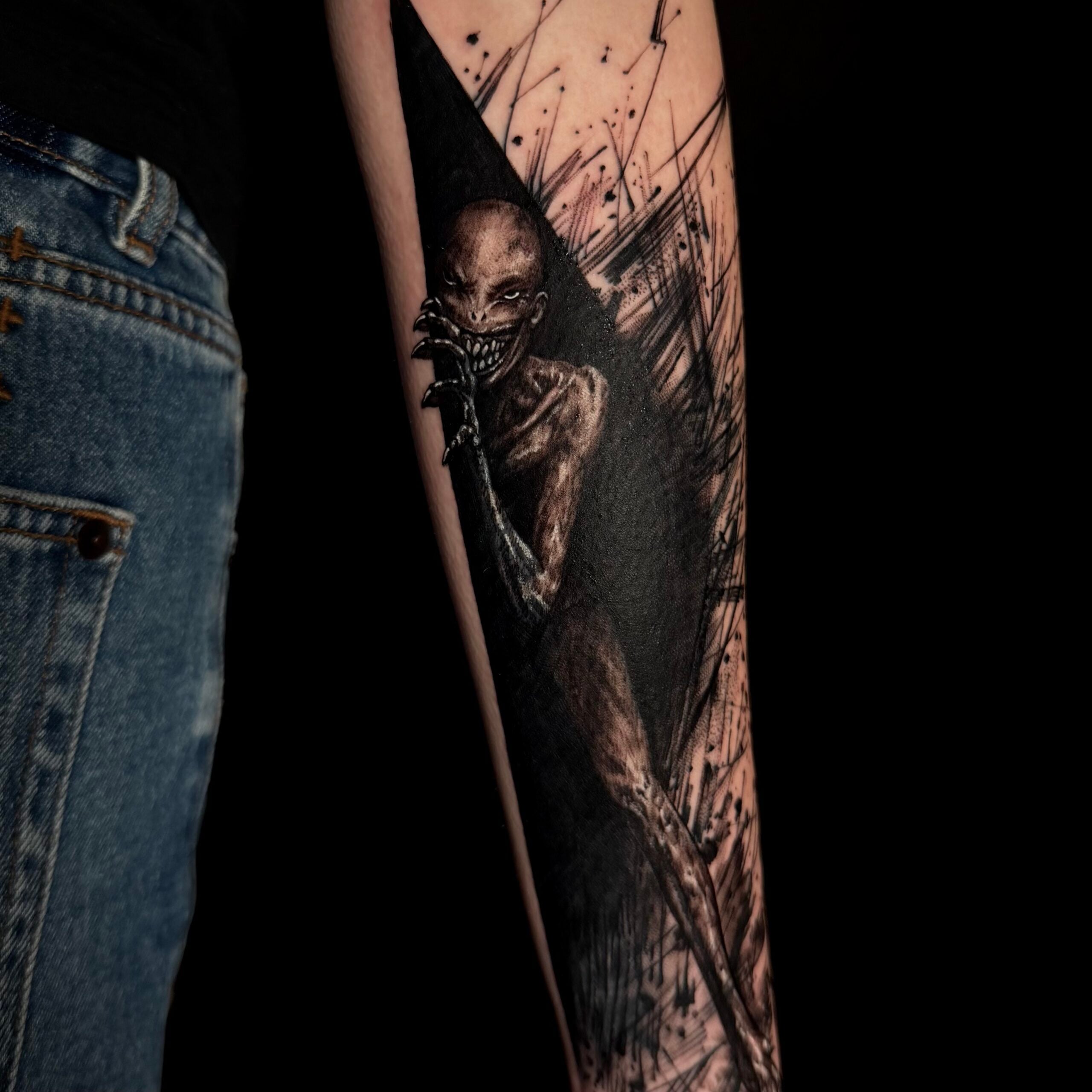
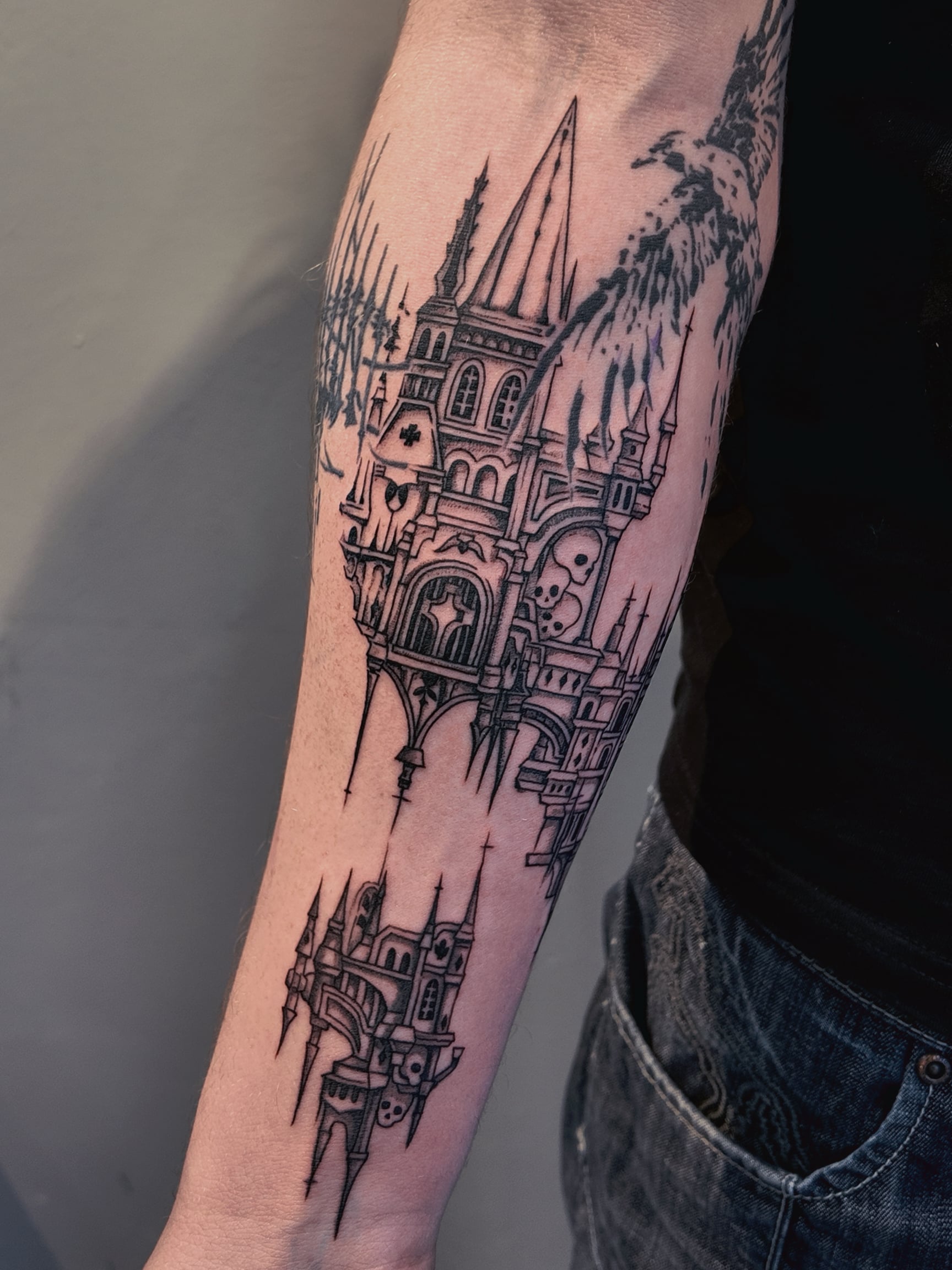
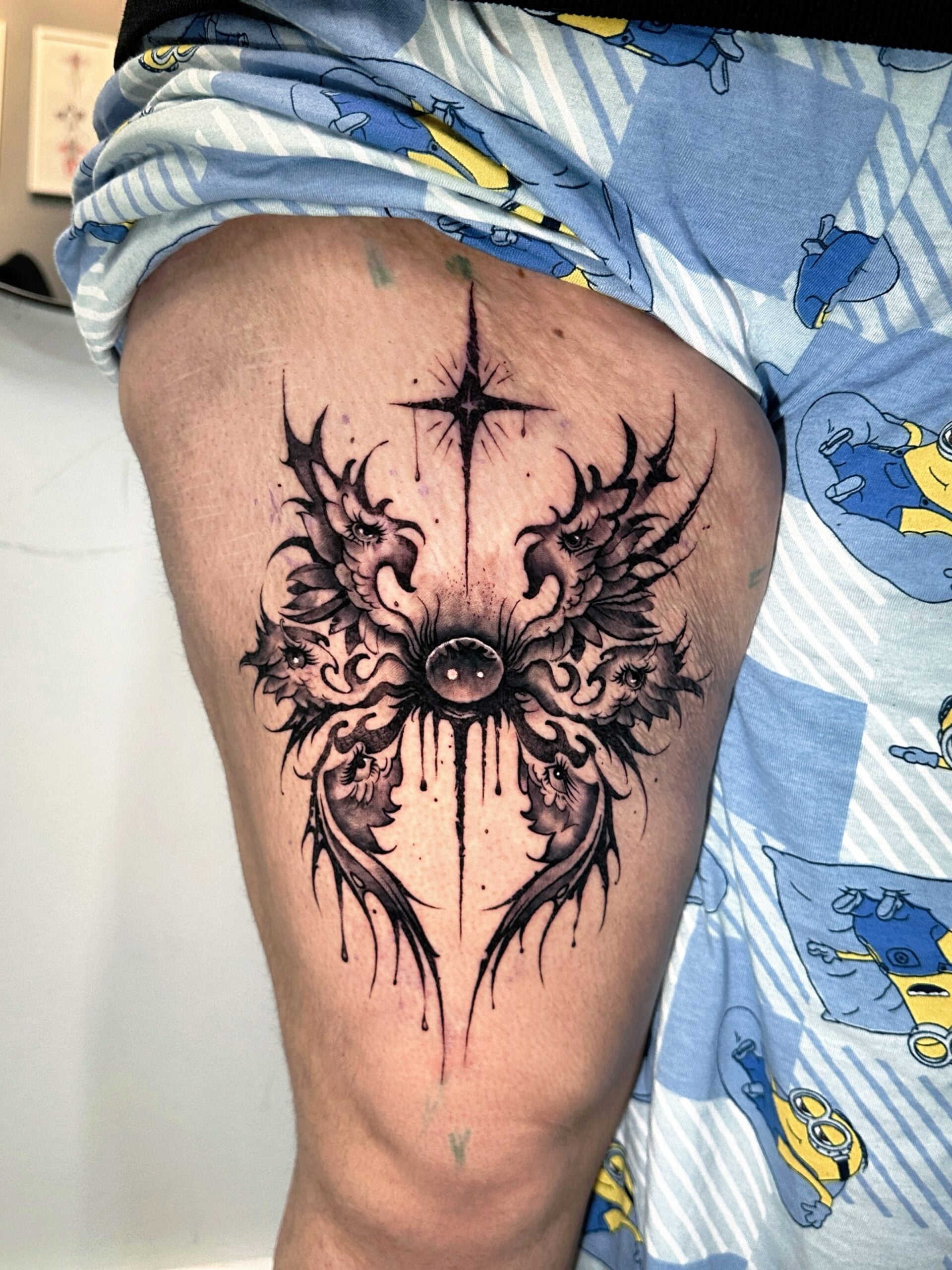
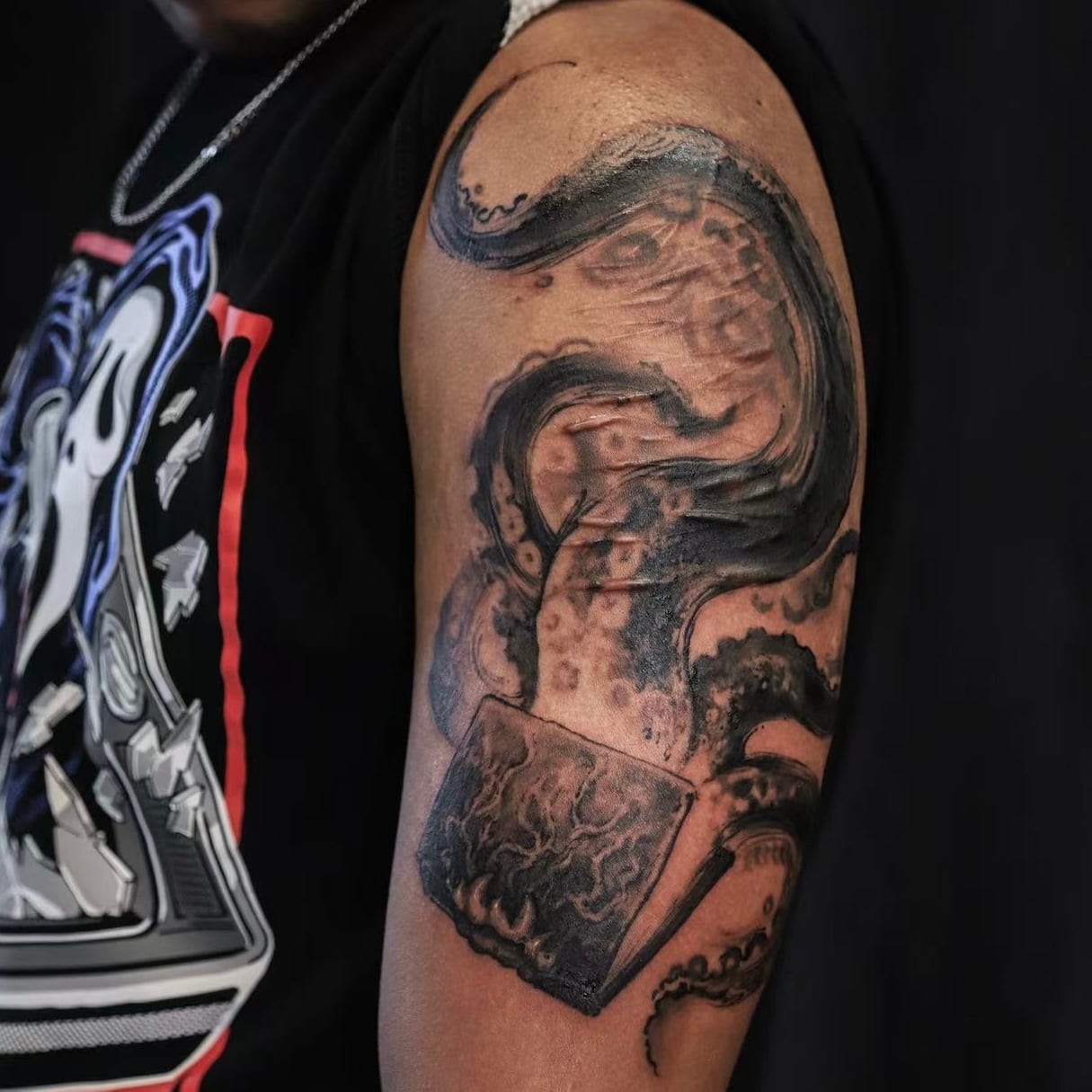
What Is a Blackwork Tattoo?
Blackwork is any tattoo style made entirely in black ink, with no colour and usually no grey wash. It covers a wide range of designs, from fine ornamental patterns to solid geometric shapes to large areas of complete black coverage.
What holds the style together is not the subject matter but the approach. A blackwork piece is built from contrast between inked and bare skin rather than from shading between tones. That is why negative space matters so much in blackwork: the parts left uninked are as considered as the parts filled in.
Practically, blackwork ages well. Solid black holds its edge longer than colour or fine grey shading, which is one reason artists recommend it for pieces meant to stay sharp for decades. It’s part of why blackwork holds up so well through an Auckland summer, when skin’s out in the sun far more, and fine detail is the first thing to soften.
Styles Within Blackwork
Blackwork isn’t one look; it’s a handful of approaches that all lean on solid black and negative space to do the work colour would do elsewhere.
Ornamental and geometric
Repeating pattern, mandala forms, linework that follows the shape of the body. Ornamental blackwork suits sleeves, chest pieces and spine work where the design can flow with the anatomy rather than sit on it. Precision matters more here than anywhere else in the style, because an uneven line in a repeating pattern is immediately visible.
Illustrative and neo-traditional blackwork
Bold outlines with heavy black fill, drawing on woodcut and engraving traditions. Animals, plants, skulls and figures rendered in solid black, with texture built from line weight rather than shading. It’s a close cousin of neo-traditional blackwork in how it handles weight and contrast.
Dotwork and stippling
Tone built from thousands of individual dots rather than solid fill or shading. Slower to tattoo, and demanding on both artist and client, but it produces a softness solid blackwork can’t. It sits well alongside ornamental designs too.
Blackout and heavy coverage
Large areas filled solid, often across a full sleeve or panel. It’s the most demanding blackwork commitment, and the one clients ask the most questions about, so it gets its own section below.
Blackout Tattoos
A blackout tattoo fills a large area of skin with solid black. Most often it’s a full sleeve, a panel of the leg, or a section of the back, worked as a single continuous field rather than as a freehand design with a subject.
It’s the biggest commitment in blackwork. Solid coverage takes multiple sessions; it’s more demanding on the skin than outline work, and it’s effectively permanent: covering a blackout piece later is very difficult, and removal is a long process.
It’s also increasingly chosen deliberately rather than as a cover-up. Some clients come for the look itself, and negative space designs, where shapes are left bare inside the black field, have made blackout work considerably more versatile than it once was.
Because of the commitment involved, blackout work starts with a longer consultation than a standard piece. We’ll talk through the placement, the number of sessions, how the skin is likely to respond and what your options are afterwards, before any ink goes in.
What to Expect From a Blackwork Session
Solid black takes longer to lay down than outline or shading work, so blackwork pieces are usually booked in longer sessions, and larger designs get split across several. Your artist will map that out at the consultation rather than leaving it open-ended.
Packing solid black is more intense than fine line work, and most clients find the fill more uncomfortable than the outline. It’s not the hardest style to sit for, but it’s steady work rather than quick.
Healing matters more with blackwork than with lighter styles. Dense black needs to be kept clean, out of direct sun and properly moisturised while it settles. Patchy healing on a solid fill is more visible than it would be in a shaded piece. Touch-ups on solid areas are normal, and part of the process rather than a sign anything went wrong.
FAQ
What does blackwork mean in tattoos?
Blackwork means a tattoo made entirely in black ink, no colour at all. It runs the gamut, from fine ornamental linework right through to solid blackout coverage. What ties it together isn’t the subject matter; it’s the contrast between inked and bare skin, rather than shading between tones.
Is a blackwork tattoo painful?
Roughly on par with other styles. That said, packing solid black is steadier, more sustained work than outlining, so most clients find the fill more uncomfortable than the line itself. Placement matters more than style anyway; ribs, sternum, inner arm, those spots are sensitive no matter what you’re getting.
How much does a blackwork tattoo cost in Auckland?
It comes down to time, not design. A small ornamental piece and a full blackout sleeve sit at opposite ends of a pretty wide range, and solid coverage always takes longer than linework of the same size. We’ll quote you after a consultation, once placement and size are locked in.
Does blackwork age well?
Better than colour, better than fine grey shading, generally speaking. Solid black holds its edge as skin changes over the years, which is exactly why artists lean towards it for pieces meant to last. Bold linework outlasts fine detail every time, whatever the style.
Can a blackwork tattoo be covered or removed later?
Small pieces, sure, though your options narrow the more coverage there is. Blackout’s a different story: very hard to cover, slow to remove. That’s why we go through it properly at consultation. Best to go in thinking of blackout as permanent, because for most practical purposes, it is.
Do I need a design ready before booking?
Not at all. Bring references, a few images you like, or honestly just the placement and a rough idea. Our artists will custom design to your brief, and with blackwork especially, the piece usually gets drawn to fit the exact part of the body it’s going on.
How do I care for my fine line tattoo to prevent fading?
- Initial healing (2-4 weeks): Clean gently with fragrance-free soap, pat dry, moisturize lightly, avoid soaking or sun exposure.
- Long-term care: Apply SPF 50+ daily, moisturize, avoid harsh chemicals, protect from friction, stay hydrated.
- Touch-ups: Fine line tattoos may need touch-ups every 3-7 years depending on placement and sun exposure.
Following these aftercare steps ensures your fine line tattoo stays crisp and elegant for years.
Book a Blackwork Consultation
Blackwork is worth talking through in person before anything is drawn. Come into either studio, our Auckland CBD shop on Anzac Avenue or our Hobsonville studio, and we will work out the design, the placement and how many sessions it needs.