

Snake Tattoo
Auckland Tattoo Studio » Land Beasts » Snake Tattoo
Snake tattoos symbolize transformation, rebirth, and power, reflecting the serpent’s mysterious allure. With their sleek forms and rich cultural meanings, snake designs are perfect for Auckland, NZ, tattoo enthusiasts seeking a bold and captivating piece of art.


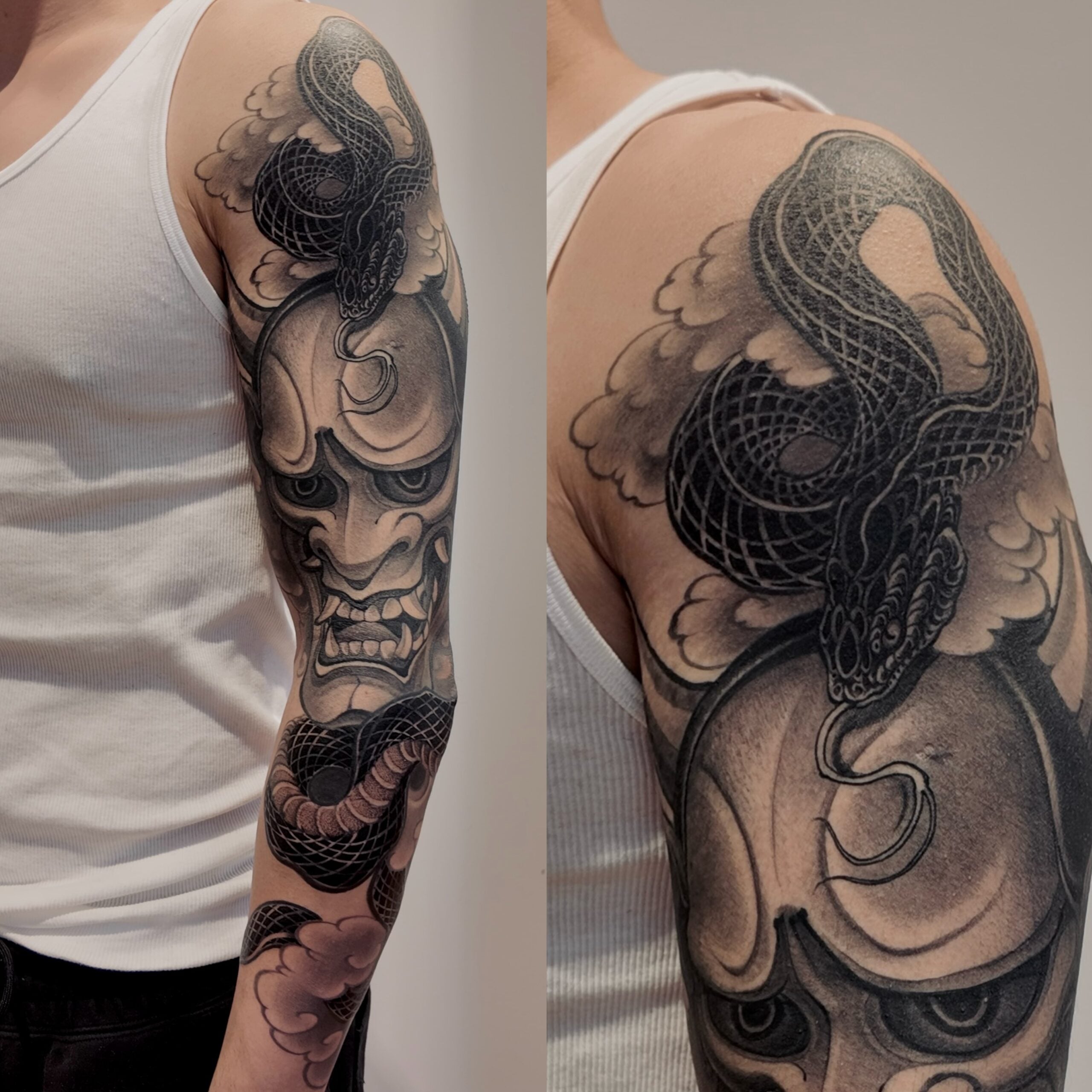
- Geometric / Abstract: Modern designs using shapes and patterns. Clean lines and symmetry create artistic, contemporary interpretations of traditional snake symbolism.
- Watercolour: Flowing colours and soft edges mimic watercolour painting. Watercolour tattoo is best for larger designs, offering a dreamy and creative aesthetic.Snake tattoos are among the most versatile and symbolically rich designs in the tattoo world. Representing transformation, rebirth, wisdom, and power, snake tattoos appeal to both men and women seeking meaningful body art.
Whether you prefer a minimalist fine-line snake tattoo design, a bold traditional cobra, or a realistic python, snake tattoos offer endless opportunities for personal expression.
At Dreamhands Tattoo Studio in Auckland, our skilled artists create stunning serpent tattoos that capture the mystique and cultural significance of these fascinating creatures. From ancient Egyptian symbolism to modern artistic interpretations to cover-ups, our snake tattoo designs carry deep meaning across cultures and centuries.
What Do Snake Tattoos Mean?
Snake tattoos carry rich symbolism across cultures and throughout history.
Universal Snake Tattoos Meaning
- Transformation & Rebirth: Shedding its skin, the snake symbolises renewal and leaving the past behind.
- Wisdom & Knowledge: Across cultures, snakes are linked to intuition, hidden knowledge, and protection.
- Power & Strength: Predatory by nature, snakes represent personal power and confidence.
- Protection & Good Fortune: In Japanese and Hindu traditions, snakes are guardians and bring good luck.
- Healing & Fertility: The caduceus and phallic symbolism connect snakes to life force and creative energy.
- Duality & Eternity: The ouroboros (snake eating its own tail) symbolises cycles, balance, and infinity.
Cultural Meanings
- Egyptian Symbolism: In ancient Egypt, the cobra, or uraeus, symbolised divine protection and royal authority. Cleopatra is famously associated with the cobra, which was believed to safeguard pharaohs in the afterlife.
- Chinese Culture: In Chinese astrology, those born in the Year of the Snake are considered wise, intuitive, and destined for prosperity. The snake represents mystery, sophistication, and deep insight.
- Japanese Tradition: Japanese culture regards snakes as sacred and protective. Often depicted alongside auspicious symbols, snakes are believed to bring good fortune, wisdom, and guardianship.
- Native American Traditions: Among Native American peoples, the snake symbolises healing, transformation, and life force. As a spirit animal, it represents shedding old patterns and embracing personal growth.
- Hindu & Indian Symbolism: In Hindu tradition, the Sanskrit word naga refers to serpents associated with water, fertility, and protection. Nagas are revered as wise, benevolent guardians and are often incorporated into spiritual and cultural artwork.
- Christian Symbolism: In Western traditions influenced by Christianity, snakes can represent temptation, sin, or danger, inspired by the serpent in the Garden of Eden. They can also symbolise healing and renewal, as seen in the Rod of Asclepius, the ancient medical symbol featuring a serpent entwined around a staff.
Different Snake Types & Their Meanings
Different snake species carry distinct meanings and aesthetic qualities, such as:
Cobra Tattoos
Cobras are iconic and sacred in Indian culture, symbolising power, protection, and wisdom. Their distinctive hood makes them visually striking. Designs often feature intricate scales and may be paired with spiritual symbols.
- Popular placement: Chest, back, arm
- Ideal for: Strength, protection, and spiritual connection
Python Tattoos
Pythons represent sacred power, fertility, and wisdom, particularly in African cultures. Often depicted coiled, these designs showcase the snake’s size and strength.
- Popular placement: Full back, sleeve, leg
- Ideal for: Bold, large-scale tattoos
Viper Tattoos
Vipers symbolise danger, instinct, and protective aggression. They are often shown striking or coiled, emphasising intensity.
- Popular placement: Arm, leg, chest
- Ideal for: Raw power and edgy designs
Rattlesnake Tattoos
The rattlesnake signifies transformation, fertility, and alertness. Its rattle adds a dynamic element to the design.
- Popular placement: Arm, leg, back
- Ideal for: Movement and energetic designs
Ouroboros Tattoos (Snake Eating Its Tail)
The ouroboros represents eternity, rebirth, and the cycles of life. Usually depicted in a circular design.
- Popular placement: Arm, leg, chest
- Ideal for: Philosophical and symbolic tattoos
Popular Snake Tattoo Design Styles
Snake tattoos come in a variety of artistic styles, each offering unique aesthetics and symbolism.
- Fine Line / Minimalist: Delicate, thin lines create elegant and simple snake imagery. Ideal for small placements like the wrist, ankle, or neck. Fine line style is perfect for subtle designs or first-time tattoo enthusiasts.
- Traditional / American Traditional: Bold outlines, limited colour palettes, and classic imagery. Often paired with roses, daggers, or skulls. New traditional tattoo works well on larger areas for a timeless, high-impact look.
- Realistic / Photorealistic: Highly detailed designs capturing scales, texture, and anatomy. Realism tattoo works best for larger placements and for those wanting lifelike, artistic snake tattoos.
- Japanese / Oriental: Incorporates traditional Japanese art and cultural symbols like flowers or water. Bold lines and vibrant colours make it ideal for back or sleeve tattoos with rich symbolism.
- Mandala / Spiritual: Snakes combined with sacred geometric patterns. Highly detailed and symbolic, often representing balance, wholeness, and spiritual meaning. Mandala tattoo is perfect for back, chest, or leg placements.
Where to Place Your Snake Tattoo
Placement depends on design size, personal preference, and visibility.
Small Snake Tattoos (Subtle)
Ideal for fine-line or minimalist designs. Common spots: wrist, ankle, behind the ear, neck, finger, and collarbone. Perfect for first-time tattoo enthusiasts or discreet tattoos.
Medium Snake Tattoos (Moderate)
Great for traditional, geometric, or realistic designs. Popular placements include forearm, bicep, shoulder, calf, thigh, and ribcage—offering enough space for detail without overwhelming the area.
full leg, spine, or even a full body wrap. Ideal for dramatic, high-impact tattoos.
Coiled Snake Tattoos
SnakLarge Snake Tattoos (Bold)
Best for realistic or Japanese-style designs. Works well on full back, full sleeve, chest, es naturally coil, making them perfect for wrapping around the forearm, bicep, leg, torso, or thigh. Coiled designs emphasise the snake’s form and create dynamic, flowing movement.
FAQ
What does a snake tattoo symbolise?
Snake tattoos symbolise transformation, rebirth, wisdom, power, and protection. Shedding their skin represents leaving the past behind and embracing growth. Meaning varies by culture, species, and personal significance.
Are snake tattoos considered bad luck?
No, snake tattoos are generally positive. While some Western traditions link snakes to danger, many cultures, Chinese, Japanese, Hindu, and Egyptian, see them as protective and auspicious.
What’s the best snake tattoo design for beginners?
Fine-line or minimalist designs are ideal for first-timers. They are subtle, less painful, easier to maintain, and suitable for small placements like the wrist, ankle, or neck.
How much does a snake tattoo cost?
Costs depend on size, complexity, placement, colour, and the artist’s experience. Simple designs: $150–$400. Complex or large designs: $500–$1,500+. Dreamhands Tattoo Studio offers free consultations.
How long does a snake tattoo take?
- Small designs: 1–2 hours
- Medium: 2–4 hours
- Large: 4–8+ hours (sometimes multiple sessions)
- Full back: 8–12+ hours
Does a snake tattoo hurt?
Pain varies by placement and personal tolerance. Less painful: arm, leg, chest. More sensitive: ribs, spine, inner arm, neck. Most clients find it manageable.
How long does a snake tattoo take to heal?
Healing takes 6–8 weeks. Initial redness/scabbing occurs in the first week; peeling and flaking in weeks 2–3; surface appears healed by weeks 4–6. Follow aftercare instructions.
Can I get a snake tattoo if I have sensitive skin?
Yes. Inform your artist so they can choose suitable ink, adjust technique, and advise on aftercare. Proper precautions make it safe for sensitive skin.
What's the difference between a snake and a serpent tattoo?
There’s no difference—both refer to the same reptile. “Serpent” is more formal or mythological; “snake” is everyday language. Symbolism is the same.
Can I customise my snake tattoo design?
Absolutely. Artists can incorporate personal elements, combine symbols, and adjust style for a unique tattoo that matches your vision.
What's the difference between a snake and a serpent tattoo?
Wear loose, breathable clothing that doesn’t rub the tattoo. Avoid tight sleeves, pants, or backpacks over the area during healing.
What should I wear after getting a snake tattoo?
Wear loose, breathable clothing that doesn’t rub the tattoo. Avoid tight sleeves, pants, or backpacks over the area during healing.
How do I care for my new snake tattoo?
For aftercare, keep it clean with fragrance-free soap, pat dry, apply aftercare ointment, avoid soaking or sunlight, and don’t pick scabs. Avoid strenuous exercise for a week and sleep on clean bedding.